Christian Huff
CFO

Special purpose machines are one off builds. Why a general company website undersells them and how landing pages by use case bring qualified inquiries.

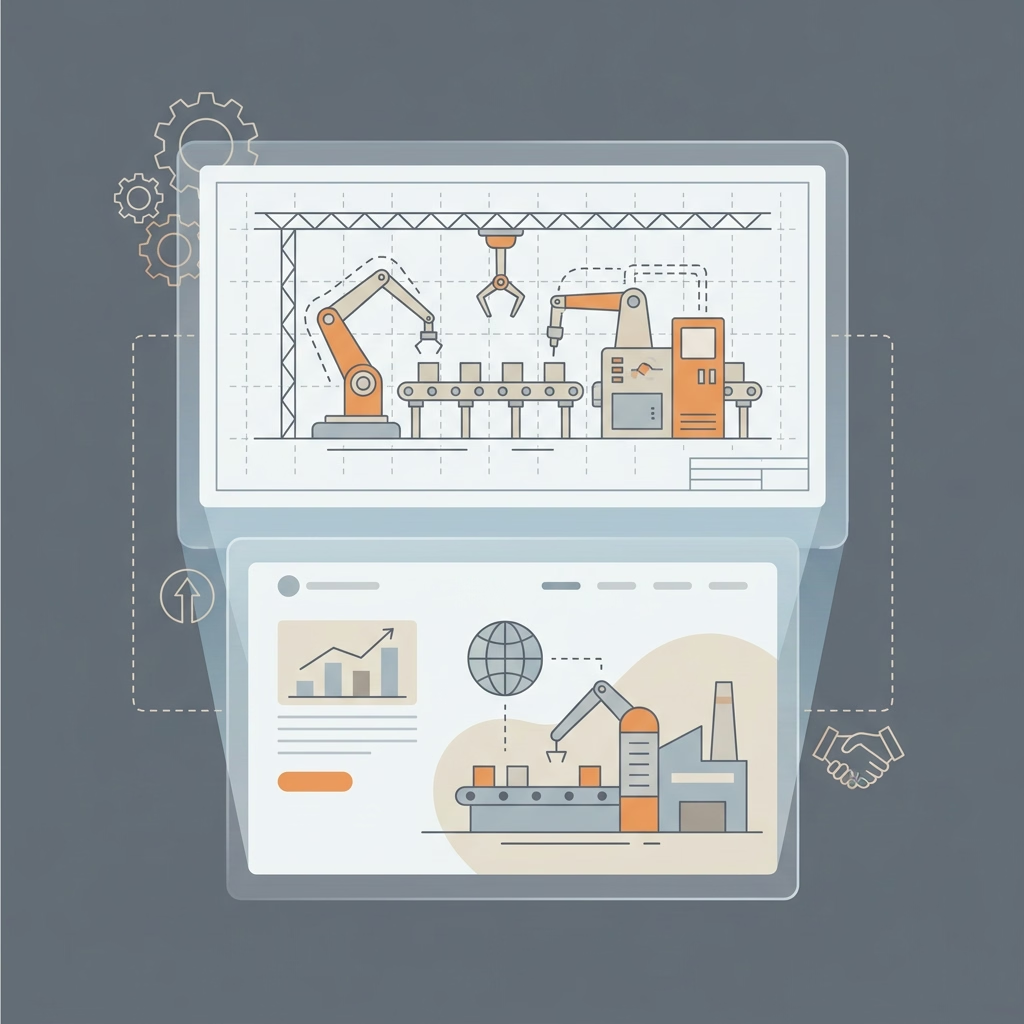
Special purpose machines are not catalog goods. Every system is built for a specific task, often as a one off build, with a high investment and a long path from the first idea to final acceptance. That is exactly why special purpose machine building struggles online. A standard website that tries to show everything at once can never do justice to a one off build. This article continues the series for machine builders and looks at the first segment. We described the starting point of the series, why sales driven pages and dedicated landing pages make the difference, in the opening article of the series.
Anyone looking for a special purpose machine is rarely looking for a product. They are looking for a partner who can solve a specific problem. Technical buyers, design engineers and project managers first check online whether a supplier understands their task before they ever get in touch. They are not looking for a price in a list, but for proof of competence: similar tasks, solved challenges, a clear path from requirement to finished machine.
This changes what the website has to do. It does not sell a finished device, but the ability to reliably develop and build a one off machine. How a page pre sorts the right prospects and takes work off the sales team is shown in How Your Website Pre Qualifies the Right Customer.
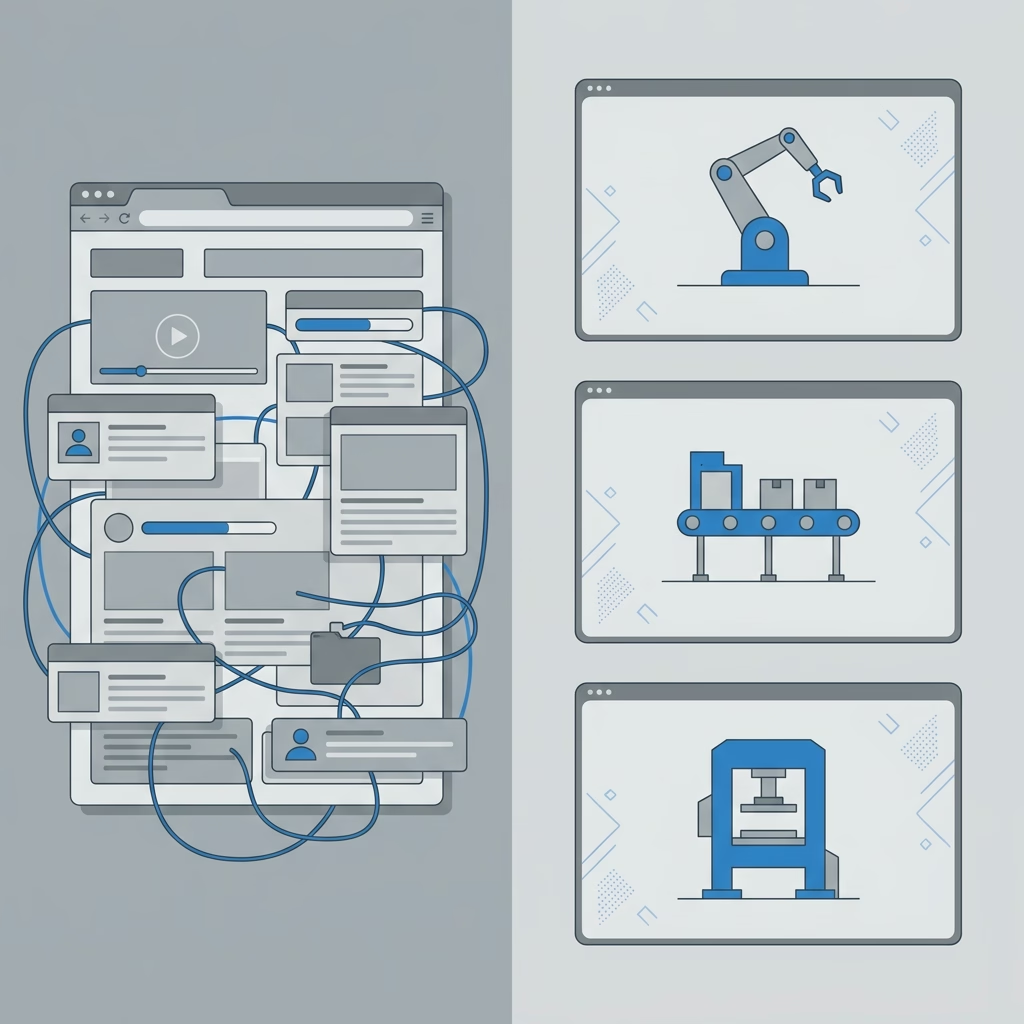
The typical site in special purpose machine building tries to cover the entire range at once. A homepage, a machines page, a services page, a contact form. The promise is roughly We build anything to your specification. For the visitor this is hard to grasp. They cannot tell whether their specific task has ever been solved here, and they leave. A highly specialized supplier turns into an interchangeable general store online.
The core of the problem is language. Many sites list technical features and machine types instead of putting the customer task at the center. Why this rarely sells and how to turn it around is described in Storytelling Instead of Feature Lists.
In special purpose machine building it is hard to build one landing page per product, because there is no single recurring product. The better cut is the use case. Instead of by machine type, you structure by the problem being solved, by industry or by process step. That way the visitor finds exactly the context that matches their task.
The result is fewer but far more relevant inquiries, because prospects with the wrong tasks filter themselves out.
No argument works stronger in special purpose machine building than proof that you have already mastered a similar task. Reference projects are therefore not an add on but the centerpiece. It is important not to show them as a mere image gallery, but as a short story: starting point, challenge, solution, result. That way the visitor understands how you think and work.
The process matters just as much. Anyone commissioning a one off build wants to know how reliable the path from requirement to acceptance is. A page that shows this sequence clearly and honestly removes uncertainty and builds trust long before the first conversation takes place.
Once these pages exist, paid advertising becomes worthwhile too. An ad targeting a specific use case has to land on a page that addresses exactly that use case. If you send the click to a general homepage instead, the message breaks and the inquiry does not come. The click is paid for, the effect fizzles out.
With landing pages by use case, the message matches from the ad all the way to the target page. On top of that it becomes measurable which use case brings inquiries and which one only costs budget. For a segment with high order values and few but valuable deals, this clarity is decisive.
We first build the website as a sales instrument: clear positioning that shows what you stand for, and a structure organized around the customer use case. On top of that we build landing pages per industry or task, each with a matching reference project and a clear next step. This creates a system that makes your expertise visible and produces inquiries predictably, instead of being just a collection of technical data.
In the next article we look at the next segment with its own buyers, questions and levers. The starting point stays the same: a website that sells, and pages that let each task speak for itself.
As CFO, Christian is responsible for the business side of Iridium Works. Over the years, he has built and managed several companies. Christian writes about digitalization, sales, and current market trends, and how Iridium's services impact its customers.
Access our exclusive whitepapers, expert webinars, and in-depth articles on the latest breakthroughs and strategic implications of webdesign, software development and AI.