Alessandro Frank
CTO

This article explores how Directus, an open-source headless CMS, simplifies complex systems by centralizing configuration, enhancing data management, and providing flexible APIs for modern digital products.
Directus is an open-source, headless Content Management System (CMS) and data platform that sits on top of any SQL database and turns it into a fully usable, API-driven content engine. Instead of forcing developers and businesses into predefined schemas or rigid editorial workflows, Directus connects to your existing data model and instantly provides a clean, intuitive admin interface as well as REST and GraphQL APIs. This makes it a powerful choice for teams that want maximum flexibility without sacrificing usability. Companies use Directus to manage structured content, power multi-channel digital experiences, and unify complex datasets—all while staying in full control of their infrastructure and data ownership. With its modular architecture, role-based permissions, automations, and strong developer tooling, Directus has become a go-to solution for startups and enterprises alike that want a future-proof, open-source alternative to proprietary CMS platforms.
When you want to create new API endpoints in Directus, the process is surprisingly flexible because the system automatically generates REST and GraphQL endpoints for every collection you define. As soon as you create a new table (or connect an existing one) in your database, Directus inspects the schema and instantly exposes it as a fully functional API—no additional coding required. You can then extend these endpoints with custom logic using Flows (Directus’ no-code automation engine), Hooks, and Extensions such as custom endpoints or custom middleware. This allows developers to add business logic, integrate external services, or create advanced workflows while keeping the core data model clean. The result is a CMS that behaves more like a flexible backend framework: you model your data, Directus generates the APIs, and you selectively enhance or override them with custom functionality whenever your project needs something more tailored.
At the core of Directus lies a simple but powerful philosophy: your data should remain yours - unlocked, unopinionated, and stored in a standard SQL database that you control. Unlike traditional or even modern headless CMS platforms that impose proprietary schemas, migration steps, or tightly coupled data models, Directus takes a “database-first” approach. It connects directly to your existing database without altering it, then dynamically generates a full admin interface and API layer on top. This means you can build structures exactly the way your business needs them, not the way a CMS dictates. Directus is intentionally non-intrusive: no hidden metadata tables, no vendor lock-in, no enforced front-end layer. Its mission is to empower developers and organizations with a clean abstraction that enhances - not replaces - their own data architecture. This philosophy of openness, transparency, and flexibility is what sets Directus apart in a landscape crowded with rigid, closed, or overly prescriptive systems.
While Directus is a powerful and flexible platform, it’s not the right tool for every project. If you’re looking for an out-of-the-box website builder with themes, templates, and WYSIWYG page editing, Directus will feel too open-ended and technical. It doesn’t generate front-end pages, handle SEO fields by default, or provide a turnkey blogging experience in the way WordPress or Wix does. Directus is also not ideal for teams without basic knowledge of SQL databases or those who prefer a more opinionated, guided setup where the CMS dictates structure and workflow. And for projects requiring document-based storage or real-time streaming content (like Sanity or Firebase), a relational SQL-first CMS may simply not be the best architectural fit. In short: Directus shines when you need full control over your data model and API layer - but if you want a pre-built website or a highly prescriptive editorial environment, there are better choices.
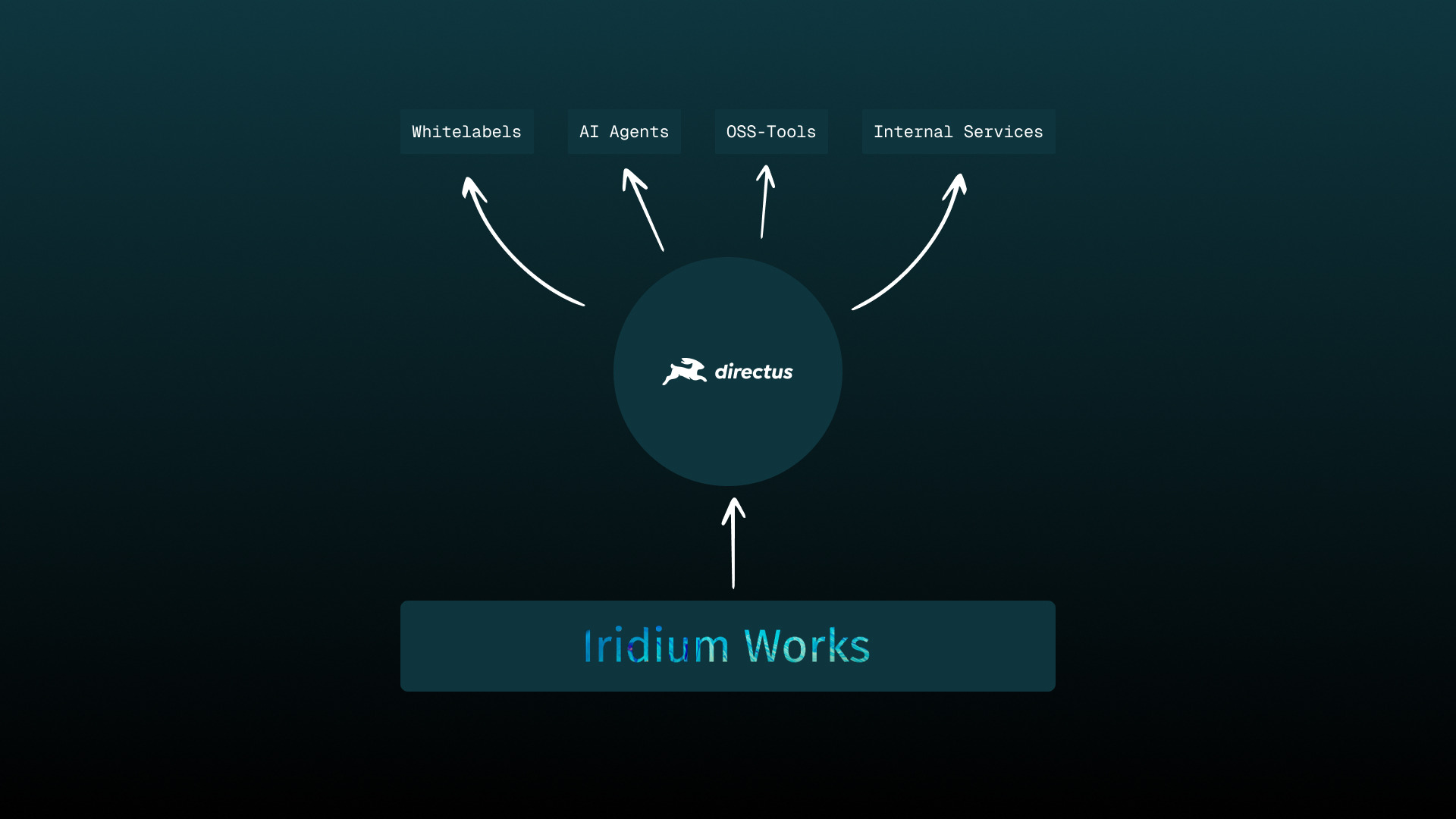
At Iridium Works, Directus has become a central pillar of our internal and customer-facing infrastructure because of its flexibility and clean API-driven architecture.
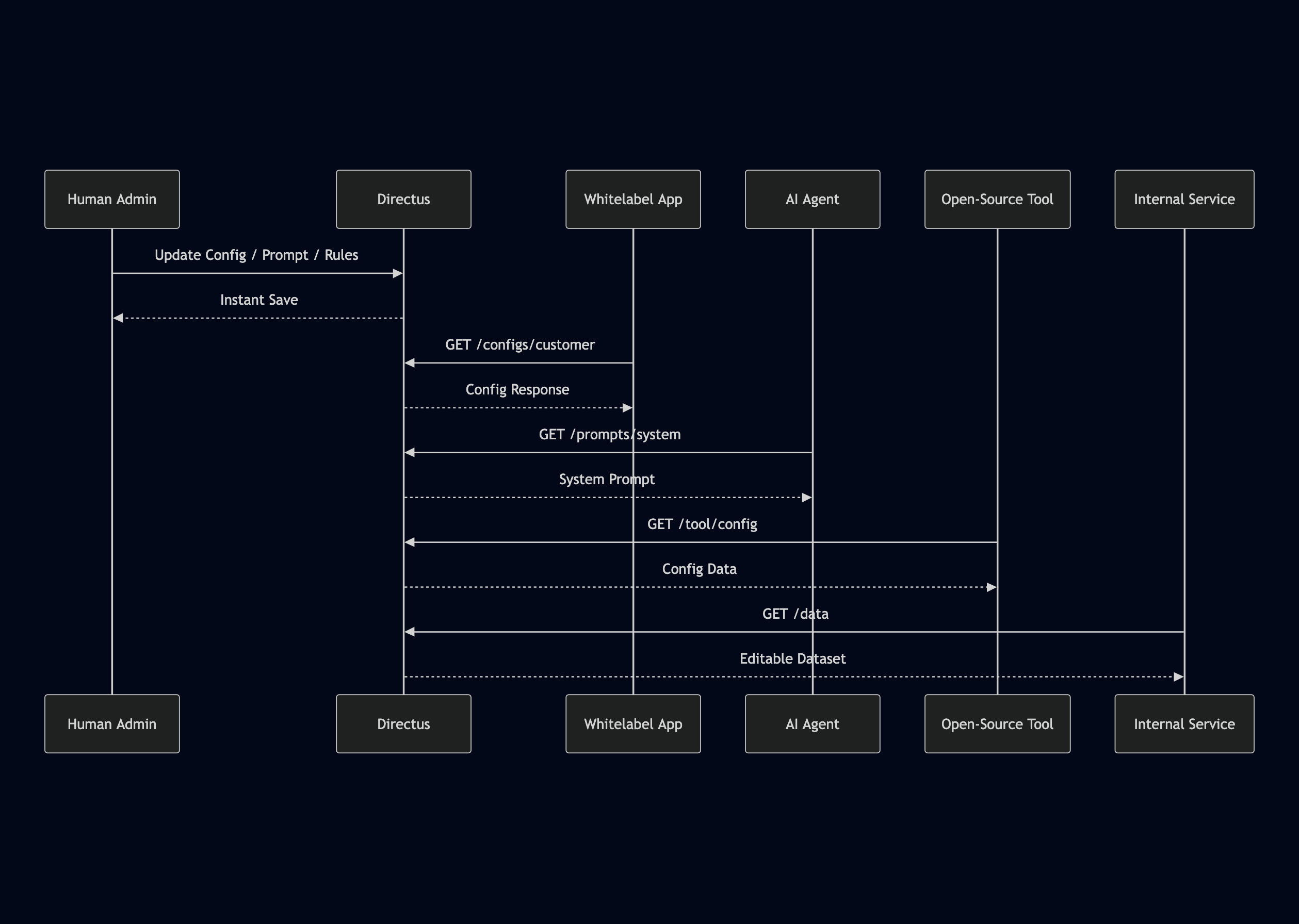
We use Directus as the configuration backbone for our whitelabel applications. Each customer can have their own tailored feature set - such as branding, enabled modules, user limits, or integration settings. Directus allows us to store all of these configurations in clean relational collections, which our applications consume via API at runtime. This means we can onboard new customers faster, deploy updates without touching code, and give non-technical account managers full control over customer-specific settings. The admin interface also makes it easy for us to visualize differences between customer profiles and ensure precise, individualized customization at scale
Directus’ robust permissions system is essential for how we handle sensitive or isolated customer data. We can create roles with tightly scoped access - down to the field level - ensuring that internal teams, clients, and automated processes can only see or modify what they are supposed to. For multi-tenant environments or projects with strict data separation requirements, this gives us security-by-design without having to build our own ACL system from scratch. Through API tokens, we also give services controlled, revocable access to exactly the data they need.
Our AI-driven systems rely on evolving sets of system prompts and role definitions that guide agent behavior. Managing these as static files quickly becomes inflexible, so we store them in Directus instead. This gives us versioned, human-editable control over prompts, guardrails, templates, and experiment variants. When we update a prompt in Directus, the change propagates instantly to the agents consuming them via API - no redeploys or code edits required. This approach turns Directus into a dynamic knowledge layer for our AI logic.
Several of our open-source utilities rely on Directus as a configuration and rules engine. Whether it’s defining scanning behavior, toggling feature availability, or maintaining lists of known patterns, Directus provides a structured and central place to manage settings. Because all data is accessed through REST or GraphQL, our tools remain lightweight, stateless, and easy to deploy without bundling configuration files in the codebase. Updates to any tool’s behavior can be made instantly by adjusting entries in Directus, with no developer involvement.
There are many scenarios where we need to maintain certain datasets manually - lists, weights, mappings, thresholds, text modules - but still access them programmatically in production systems. Directus is the perfect fit for this: instead of hardcoding values or storing them in scattered JSON files, we centralize them in collections with a clear structure. Our backend services then fetch these values through Directus APIs, ensuring real-time accuracy. The admin interface allows quick updates without requiring a deployment, which dramatically shortens iteration cycles for business logic and operational fine-tuning.

Directus stands out not just as a modern headless CMS, but as a flexible data platform that adapts to the needs of real businesses. Its database-first philosophy gives teams true ownership over their data, while its powerful admin interface and automatically generated APIs streamline development and content operations alike. For us, Directus has evolved into far more than a content tool - it has become a central piece of our infrastructure, powering everything from whitelabel configurations to AI systems and internal tools. Its extensibility, transparency, and lightweight architecture allow it to fit naturally into complex ecosystems without forcing disruptive workflows or costly migrations. And that is ultimately what makes Directus so compelling: it enhances your existing architecture instead of replacing it. Whether you're building a new product, modernizing legacy systems, or unifying scattered datasets, Directus offers a future-proof, open-source foundation that grows with your needs.
Alessandro is a technical mastermind and Chief Technology Officer at Iridium Works. Over the years he has build countless systems working with Front- and BackEnd, DevOps and as a Tech Lead. He writes about new technology, software development.
Access our exclusive whitepapers, expert webinars, and in-depth articles on the latest breakthroughs and strategic implications of webdesign, software development and AI.